
By SEAMEO RIHED
The rapid adoption of generative artificial intelligence (GenAI) is creating a new challenge for higher education: not simply how to govern AI, but how to translate increasingly sophisticated principles and frameworks into practical institutional action.
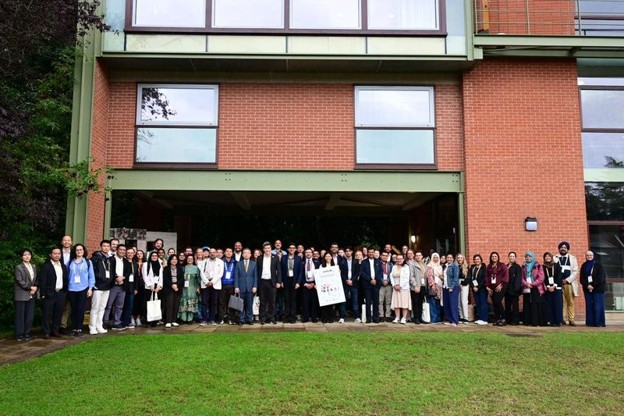
This was a recurring theme at ASEFInnoLab7 and the ASEM Expert Group Meeting on Digitalisation and Artificial Intelligence, held on 27–28 August 2026. Discussions among experts from international organisations, academia and student representatives highlighted a growing gap between the development of AI governance frameworks and their implementation in universities.
The discussions suggest that the next phase of AI governance in higher education will depend less on producing additional high-level principles and more on developing the institutional capacity, practical tools and shared approaches needed to put those principles into practice.
A three-level challenge: from policy to practice
Prof. Yang Junfeng, UNESCO Chair on AI in Education at Hangzhou Normal University, presented a three-level framework for understanding AI governance in education.
At the macro level, governance concerns whole-system questions such as ethics, equity, human-centred learning and lifelong learning. At the meso level, these principles need to be translated into operational measures, including resource allocation, curriculum design and staff development. At the micro level, AI is changing the roles of teachers, students and administrators: teachers increasingly act as ethical guides and integrators, students as critical co-creators, and administrators as institutional gatekeepers.
This framework highlights a fundamental policy challenge. A principle such as “human oversight” may be clear at the policy level, but it does not automatically answer practical questions faced by universities: How should an assessment be redesigned when students have access to GenAI? When should AI use be disclosed? Which tools can be safely adopted? What training do teachers require? How should institutions address privacy and data protection?
The challenge is therefore increasingly one of translation: translating principles into institutional procedures, and procedures into everyday practice.
Governance is moving beyond prohibition
The discussions also pointed to a shift in institutional approaches to GenAI. Rather than relying primarily on blocking or restricting AI tools, universities are increasingly exploring forms of ecosystem governance, combining policy safeguards with technical support, education and continuous monitoring.
Examples discussed during Prof. Yang’s presentation included institutional ethics and disclosure requirements, approved AI tool lists, security and privacy feedback mechanisms, and tiered AI capability programmes for educators and students.
This does not imply unrestricted use of AI. Rather, it suggests that effective governance may require institutions to distinguish between different uses and levels of risk while maintaining human responsibility for consequential decisions.
Such an approach becomes particularly important in assessment, where AI-assisted tools can affect academic integrity, student privacy and the reliability of evaluation.
Regional frameworks need an implementation layer
Southeast Asia is already developing a foundation for responsible AI governance. Regional instruments, including the ASEAN Guide on AI Governance and Ethics and the ASEAN Responsible AI Roadmap, provide principles and directions for responsible AI development.
The challenge is ensuring that these frameworks reach the people who have to apply them.

As discussed during the meeting, frontline educators and administrators may have limited familiarity with regional AI frameworks or may find it difficult to translate broad principles into institutional and classroom-level decisions. At the same time, universities often develop policies reactively as new AI-related issues emerge.
This can produce considerable variation in institutional practice, even where institutions operate within the same national or regional policy environment.
The resulting gap is not necessarily a lack of policy. It is a lack of usable policy infrastructure: practical guidance, institutional tools, training, examples and mechanisms for learning from implementation.
The student experience reveals the consequences
The implementation gap is particularly visible from the student perspective.
Representatives from the International Association of Universities (IAU) and the European Students’ Union (ESU) highlighted concerns arising when legislation and institutional policies develop faster than practical guidance. Where rules are unclear, students may face uncertainty over acceptable AI use, while institutions may turn to AI-detection or surveillance technologies without sufficiently addressing their limitations or potential effects on students.
The discussion pointed to emerging approaches that move away from blanket prohibition towards guided and equitable integration. The University of Iceland’s “Equity by Design” approach, for example, was cited as a practice that considers equitable access to AI tools alongside transparent expectations for assessment.
The broader lesson is that responsible AI governance needs to consider not only what institutions wish to prevent, but also what students and educators need in order to use AI responsibly.
The AI governance gap is also a capacity gap
The governance challenge cannot be separated from the global distribution of AI capabilities.
Anja Gendo of the UN Internet Governance Forum (IGF) highlighted the concentration of AI infrastructure, data and research capacity, and the resulting risk that countries with weaker local capabilities become increasingly dependent on technologies and standards developed elsewhere.
The discussion also emphasised that AI governance is inherently multi-stakeholder. Governments establish rules, but policymakers cannot fully understand the implications of rapidly evolving technologies without contributions from technical experts, academia, civil society and other stakeholders.
For higher education, this creates a dual responsibility. Universities need to build their own capacity to use and govern AI, while also contributing research and evidence to the wider policy process.
Capacity building therefore needs to go beyond training individuals to use particular AI tools. It includes institutional expertise in data governance, risk assessment, curriculum and assessment redesign, privacy, procurement, research and policy evaluation.
Towards more interoperable AI governance
The proliferation of national, regional and voluntary AI frameworks introduces another challenge: fragmentation.
Different jurisdictions may use different terminology, risk classifications, standards and assessment approaches. For higher education institutions engaged in cross-border education, student mobility and collaborative research, these differences can create additional complexity.
As discussed during the IGF session, there is a need for greater alignment around common methods, shared vocabulary, testing criteria, risk assessment, auditing and documentation. International standards such as ISO/IEC 42001 and ISO/IEC 23894 provide examples of how broad principles can be translated into operational approaches to AI management and risk.
For Southeast Asia, interoperability does not necessarily mean creating identical national regulations. Instead, regional cooperation could focus on developing common reference points that allow different systems to communicate and learn from one another.
What could this mean for Southeast Asian higher education?
The discussions at ASEFInnoLab7 and the ASEM meeting point towards several areas where regional cooperation could add value.
First, existing AI frameworks could be accompanied by practical higher education tools. Rather than developing another standalone set of principles, regional actors could support the development of model institutional policies, AI-use disclosure guidance, assessment frameworks, risk-assessment templates and practical case studies linked to existing ASEAN and national frameworks.
Second, capacity building should target institutions as well as individuals. AI literacy programmes remain important, but universities also need systems and expertise for governance, privacy, procurement, risk management and quality assurance.
Third, a shared regional vocabulary could support policy interoperability. A common glossary and practical terminology could help policymakers, university leaders, researchers, educators and students navigate different national approaches.
Fourth, higher education institutions can contribute evidence to AI policymaking. Universities are not only users of AI. They are also research institutions and spaces where the effects of AI on learning, assessment, academic integrity and inequality can be observed and studied. Stronger connections between research and policymaking can help ensure that governance evolves with evidence.
Finally, regional cooperation could explore approaches to institutional self-assessment. A common reference framework could allow universities to examine their own capabilities in areas such as governance, staff development, student support, data protection, assessment and human oversight. Such an approach would focus on identifying capacity gaps and supporting institutional learning rather than comparing institutions against one another.
From principles to practice
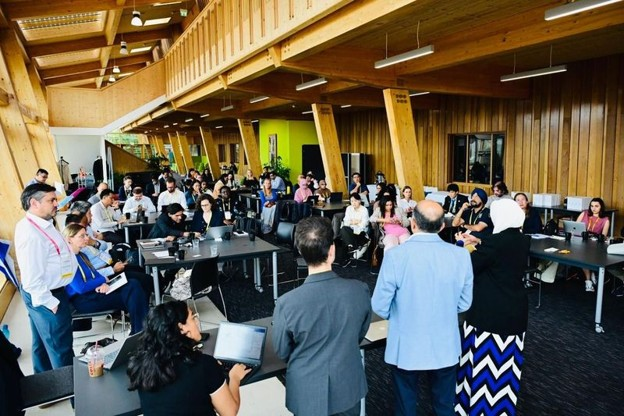
The discussions point to a broader transition in AI governance. The central question is moving from “What should AI governance look like?” towards “How can institutions actually implement it?”
For Southeast Asian higher education, this distinction is particularly important. The region already has emerging policy frameworks and growing interest in responsible AI. The next challenge is to connect these frameworks with the realities of universities, educators and students.
This creates an opportunity for regional cooperation to focus on the layer between policy and practice: sharing institutional experience, developing practical tools, strengthening capacity, and creating common reference points that can work across diverse higher education systems.
The future of responsible AI governance in higher education will ultimately be determined not only by the quality of the principles adopted, but by whether institutions and the people within them have the knowledge, tools and capacity to put those principles into practice.