

As higher education systems expand across the region, policymakers and university leaders are confronting new questions about quality, purpose, and public trust.
For decades, expanding access to higher education was widely viewed as an unquestionable public good. Across Southeast Asia, governments invested heavily in universities, opened new institutions, and encouraged greater participation as part of broader national development ambitions. Higher education became synonymous with opportunity, social mobility, and economic progress.
Today, however, a more complex conversation is beginning to emerge.
As university systems across the region continue to expand, policymakers and institutional leaders are increasingly asking whether access alone is enough. Questions surrounding quality, employability, institutional purpose, financial sustainability, and societal contribution are now moving to the centre of higher education discourse.
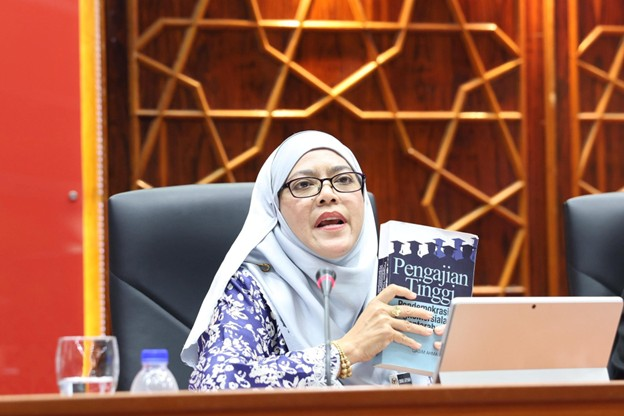
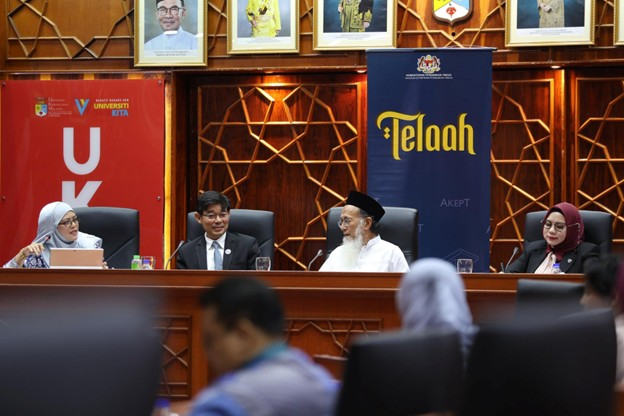
These tensions formed the basis of a recent high-level Telaah session jointly convened by SEAMEO Regional Centre for Higher Education and Development and Malaysian Academic Leadership Academy under the Ministry of Higher Education Malaysia’s intellectual discourse initiative.
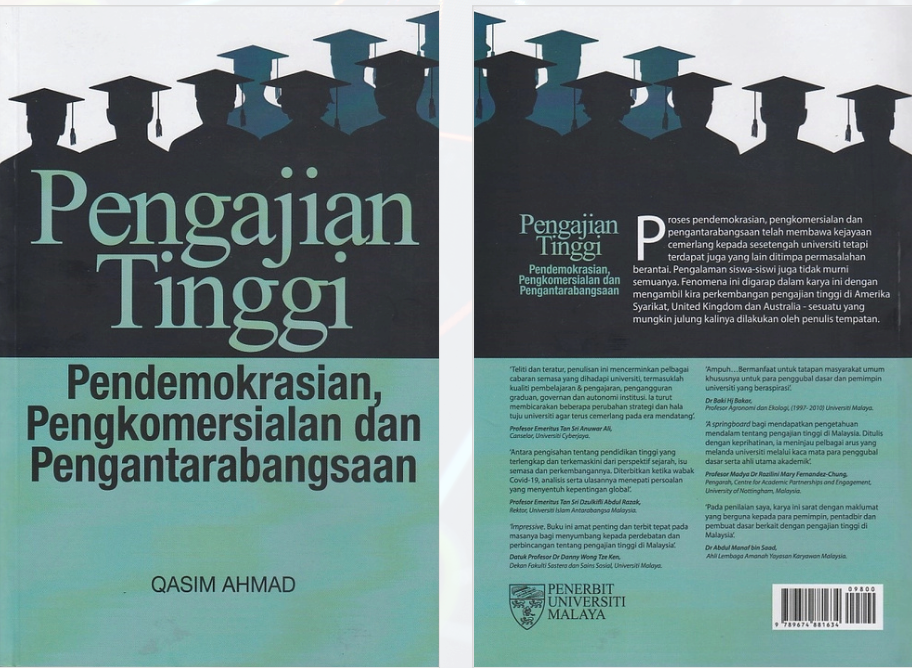
The session centred on the book Higher Education: Democratisation, Commercialisation and Internationalisation authored by Qasim Ahmad and published by Universiti Malaya Press in 2024. More than a conventional book discussion, the session evolved into a broader regional reflection on the future direction of higher education in Southeast Asia.
Beyond Expansion
The discussion took place at a particularly significant moment for Malaysia’s higher education sector. Earlier this year, the Malaysian government launched the Rancangan Pendidikan Tinggi Malaysia 2026–2035 (RPTM 2026–2035), a new ten-year roadmap intended to guide the country’s higher education transformation agenda.
Within this broader context, the book’s themes—democratisation, commercialisation, and internationalisation—resonated strongly with ongoing regional debates.
One of the central questions raised throughout the session was deceptively simple: What is the purpose of higher education today?
Historically, universities were seen primarily as institutions for intellectual formation and nation-building. Over time, however, they have also become engines for workforce development, economic competitiveness, research innovation, and global prestige. As expectations continue to grow, universities are increasingly expected to serve multiple—and sometimes competing—roles simultaneously.
The expansion of access has been particularly transformative. Across Southeast Asia, higher education systems have shifted from elite models serving a small segment of society to mass systems serving increasingly diverse populations.
Yet participants noted that expansion without differentiation can create new challenges.
In Thailand, for example, speakers reflected on how the rapid massification of higher education successfully increased participation, but also generated concerns regarding graduate quality, institutional duplication, and employability outcomes. Similar questions are now emerging across the region as governments pursue ambitious participation targets while attempting to preserve academic standards.

The challenge, many argued, is no longer simply increasing access, but ensuring that expanded systems remain meaningful, sustainable, and responsive to societal needs.
The Growing Pressure of Commercialisation
As student populations increase, governments are also confronting the financial realities of sustaining large-scale higher education systems.
Public funding alone is often insufficient to accommodate growing demand, leading many countries to encourage private provision, industry partnerships, alternative revenue streams, and more entrepreneurial university models.
This has fundamentally changed the relationship between universities, students, and society.
Participants observed that higher education increasingly operates within market dynamics, where students are frequently positioned as consumers investing in their future employability. However, unlike conventional commercial transactions, the returns of higher education are never fully guaranteed.
The conversation raised concerns about rising student debt, uneven graduate outcomes, and the proliferation of institutions that may struggle to maintain consistent quality amid rapid expansion.
At the same time, speakers cautioned against treating commercialisation itself as inherently negative. Universities require resources to attract outstanding faculty, maintain research infrastructure, improve facilities, and deliver quality education. The issue, they argued, is not whether universities should generate income, but how revenue generation is managed and whether it ultimately serves educational and societal goals.
Examples from across the region illustrated how institutions are increasingly exploring partnerships, endowments, shared resources, and commercial ventures to remain financially sustainable without placing excessive burdens on students.
Underlying these discussions was a broader recognition that leadership and governance are becoming increasingly critical in shaping the future of universities.
Internationalisation and the Pursuit of Global Relevance
Alongside democratisation and commercialisation, internationalisation has emerged as another defining force shaping higher education systems in Southeast Asia.
Governments and universities across the region are seeking stronger international partnerships, greater student mobility, improved research visibility, and higher positions in global rankings.
Malaysia, in particular, has invested significantly in positioning itself as both a regional and global higher education hub. Yet during the discussion, participants questioned whether internationalisation should be pursued primarily for prestige, or as part of a broader strategy to strengthen regional cooperation and human development.
One recurring theme was the need for universities to move beyond imitation and instead cultivate distinct institutional strengths and specialisations.
Rather than attempting to make every university globally competitive in the same way, participants suggested that institutions should identify areas where they can meaningfully contribute—whether through research excellence, technical and vocational training, community engagement, industry collaboration, or regional development.
Such differentiation, speakers argued, would allow systems to expand more sustainably while preserving quality and relevance.
Rethinking Success in Higher Education
The discussion also challenged conventional assumptions about success itself.
For many years, higher education expansion was closely linked to economic aspirations and promises of upward mobility. A university degree was often presented as a guaranteed pathway toward stable employment and improved living standards.
But changing labour markets, technological disruption, and evolving industry demands are complicating this narrative.
Employers are increasingly prioritising adaptable skills, interdisciplinary competencies, and practical experience alongside formal qualifications. At the same time, some graduates face growing uncertainty regarding employment outcomes despite rising educational attainment.
As a result, participants argued that higher education systems may need to reconsider how success is defined—not solely through enrolment growth, rankings, or graduate numbers, but through broader contributions to society, innovation, and human development.
The conversation repeatedly returned to one underlying principle: universities should not merely produce degree holders, but individuals capable of contributing meaningfully to their communities, economies, and societies.
A Shared Regional Responsibility
While the discussion focused heavily on Malaysia and Thailand, many of the challenges raised are shared across Southeast Asia.
Countries in the region face differing capacities, resources, and development trajectories, yet increasingly operate within interconnected educational, economic, and technological ecosystems.
Participants therefore emphasised the importance of regional cooperation in addressing shared concerns surrounding quality assurance, mobility, research collaboration, and institutional development.
Rather than competing solely for rankings and prestige, universities and governments may benefit from strengthening collective regional capacities and building complementary systems that support broader ASEAN development goals.
In the end, the Telaah session highlighted that the future of higher education in Southeast Asia may depend not simply on producing more graduates, but on redefining what universities are ultimately expected to contribute to society.
Access remains important. So do excellence, innovation, and global engagement.
But as higher education systems continue to evolve, the region now faces a more fundamental challenge: ensuring that universities remain institutions that serve not only economies, but the long-term development of people and societies themselves.