
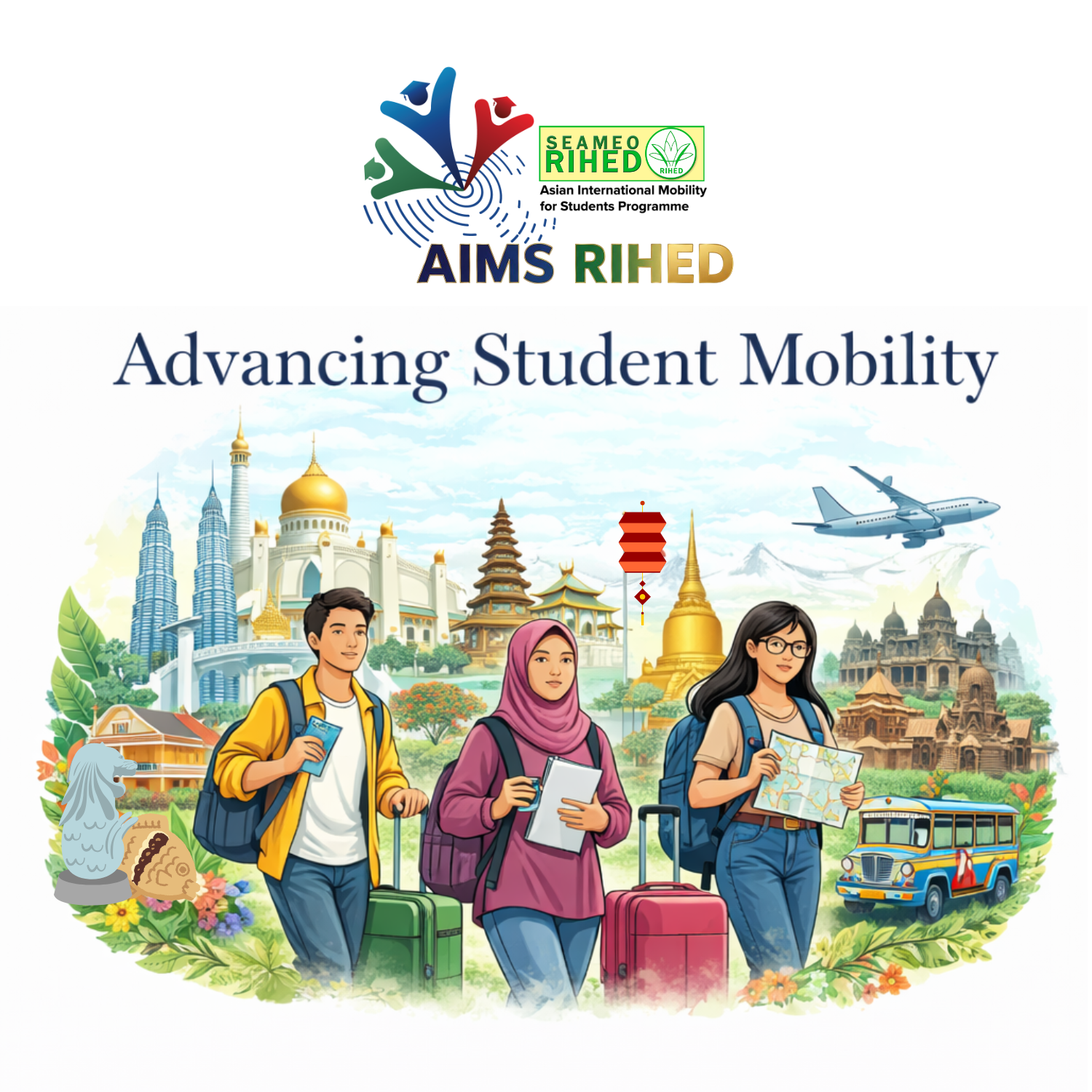
From Mobility to Meaning: The Bacolod Strategy and AIMS’ Next Chapter
In July 2025, in Bacolod City, the Asian International Mobility for Students (AIMS) Programme crossed an important threshold. What began as a mobility initiative has now entered a more deliberate phase of system-building, marked by the adoption of its Strategic Framework 2026–2028, the “Bacolod Strategy: Consolidate and Connect.”
The shift is subtle in language but significant in direction. AIMS is no longer only about enabling student exchange; it is about shaping what that exchange produces and how it contributes to a more connected regional higher education space.
From Movement to Architecture
For over a decade, AIMS has functioned as one of Southeast and East Asia’s most visible mobility platforms. Students moved, partnerships formed, and trust gradually accumulated.
The Bacolod Strategy builds on this foundation by asking a more structural question: what should mobility achieve?
Its answer is twofold. First, consolidation. Strengthening what already exists, from credit transfer systems to institutional partnerships, to ensure that mobility is not episodic but embedded. Second, connection. Expanding linkages across countries, institutions, and stakeholders, positioning AIMS as part of a broader ecosystem rather than a standalone programme.