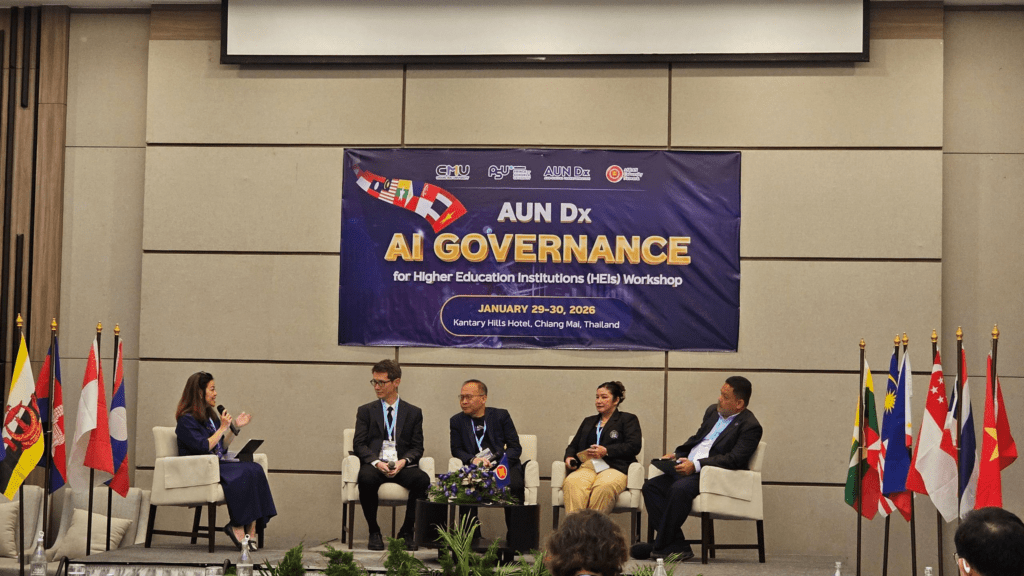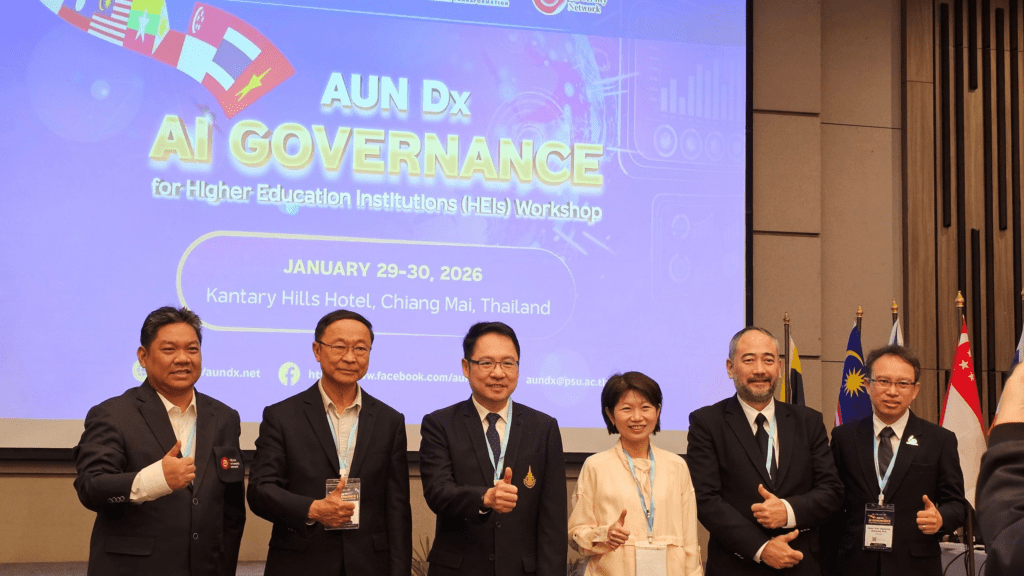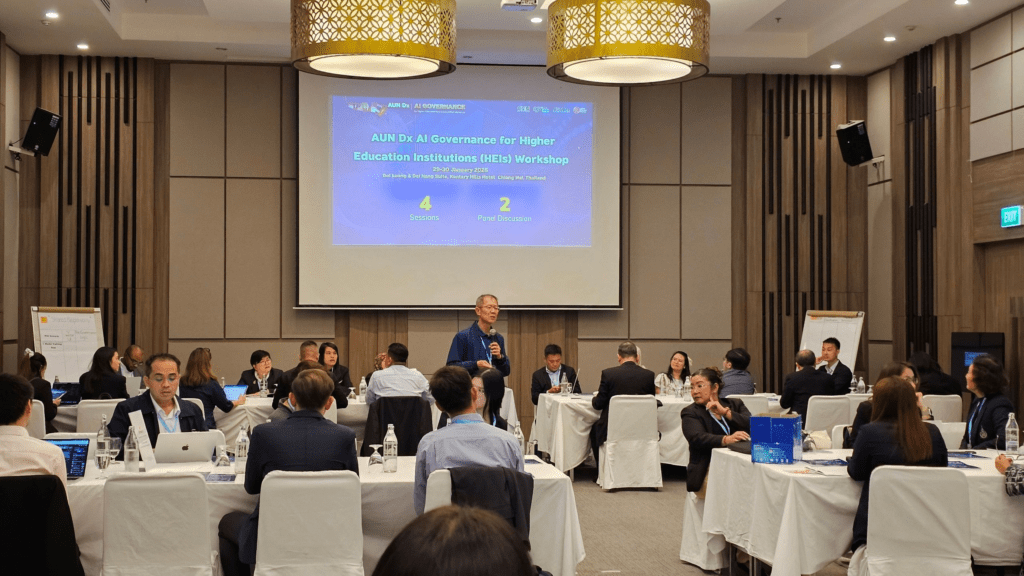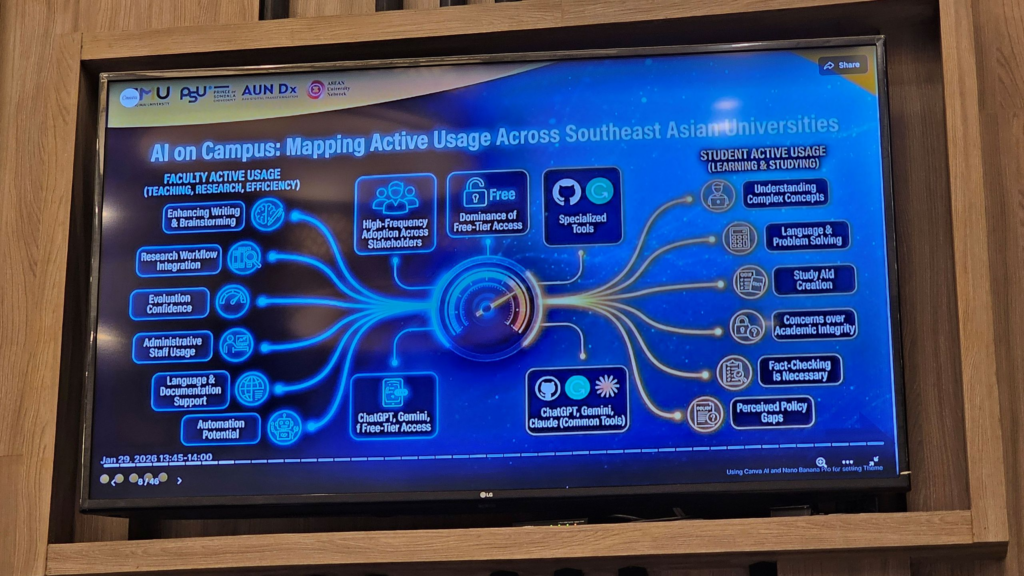
As artificial intelligence (AI) evolves at a “hypergrowth pace”, sometimes described as an experimental “teenage phase”, Southeast Asian higher education institutions (HEIs) are facing a critical crossroads. Recent discussions among regional experts at the AUN Dx AI Governance Workshop highlight that the challenge is not merely technical, but deeply structural and ethical.
For policymakers and university leaders across Southeast Asia, three core insights emerged as essential pillars for navigating this transformation.
1.Prioritising Human Agency over “Cognitive Replacement”
The most vital takeaway for regional policy is the distinction between AI as a tool for enhancement and AI as a “cognitive replacement”. There is growing concern about “cognitive offloading,” in which the ease of generative AI could erode the critical thinking and analytical skills of the next generation of Southeast Asian leaders.
Policy Relevance: Governance frameworks must move beyond simple “use or ban” rules. Instead, they should mandate “human-in-the-loop” models. Policies should ensure that AI is used to expand human potential and independent thought rather than replacing the authenticity of research and learning. For the region, which relies on its human capital for economic growth, preserving the intellectual rigour of its graduates is a matter of long-term regional competitiveness.
2.Reimagining Governance as an Innovation Enabler
A common misconception is that regulation stifles progress. However, workshop insights suggest that AI governance should be viewed as an enabler of innovation rather than a barrier. By creating a “safe space” through clear ethical guidelines, universities can actually encourage experimentation without the fear of compromising data privacy or academic integrity.
Policy Relevance: Effective AI policy requires a “blended approach” that breaks down silos between IT, data management, and risk governance. Rather than treating AI as an isolated technical issue, regional policymakers should promote digital and AI literacy. Upskilling the broader academic community ensures that the deployment of AI is driven by institutional mission and academic freedom, rather than just technological availability.
3.Agile, Sector-Specific Governance over Rigid Legislation
While national-level laws are being drafted across the region, there is a risk that rigid legislation may struggle to keep pace with rapid AI development. The workshop emphasised establishing robust, sector-specific systems of responsibility and transparency before relying on legal mandates.
Policy Relevance: The AUN Dx AI Governance & Ethics Framework, which is currently in development, is a prime example of “sector-specific” and “bottom-up” governance that is tailored to universities’ unique responsibilities. For Southeast Asia, there is an opportunity to integrate this framework into broader regional strategies, including the Common Space in Southeast Asian Higher Education. By adopting flexible, mission-driven guidelines at the institutional level, the region can remain adaptive and ensure that AI implementation remains accountable and transparent even as the technology evolves.
Conclusion
For Southeast Asia, the path forward is not to race against AI, but to govern its integration in a way that upholds institutional integrity. By focusing on human agency, fostering a safe environment for innovation, and prioritising agile governance, the region’s higher education sector can ensure that AI serves as a powerful assistant in achieving its educational missions.