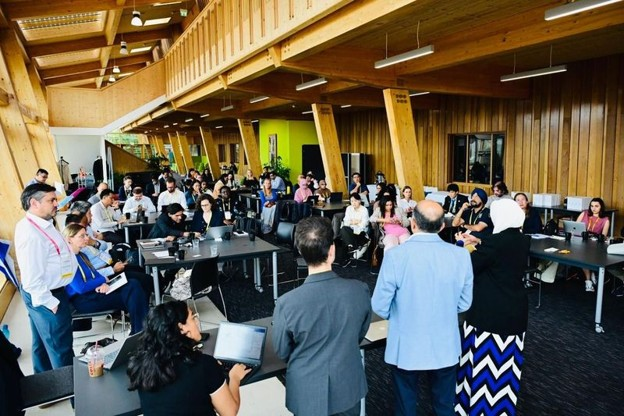
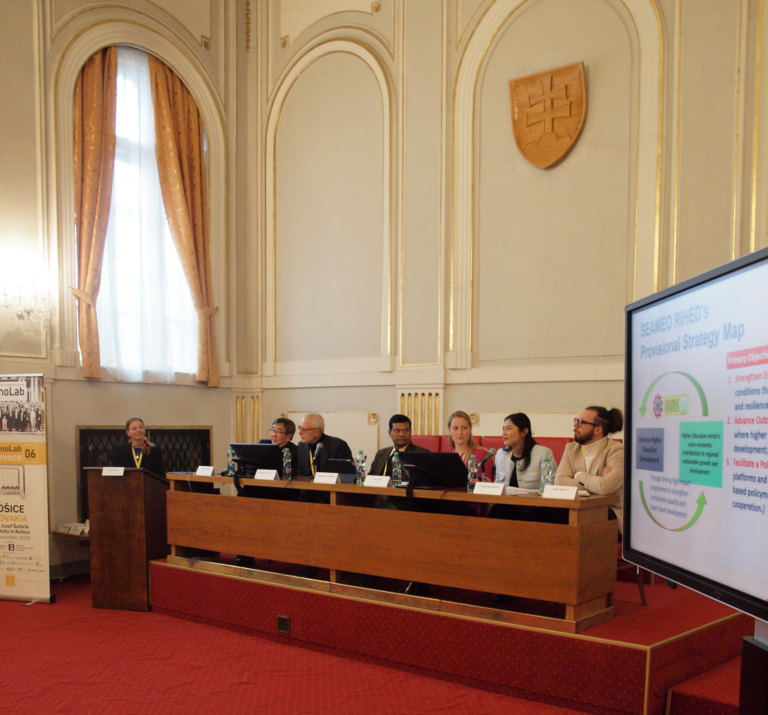
In December 2025, at ASEFInnoLab6 in Košice, a familiar question resurfaced in unfamiliar form: can universities move fast enough to harness artificial intelligence without losing their moral centre?
The presentation by SEAMEO RIHED did not treat AI as a gadget or trend. It framed it as a structural force reshaping higher education’s social contract. The issue is not whether universities will adopt AI. They already are. The issue is how.
Innovation without amnesia
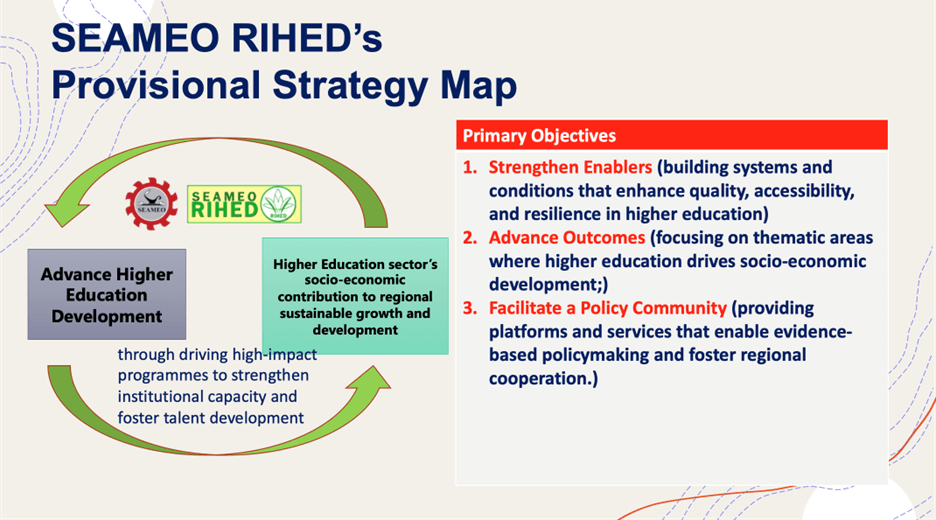
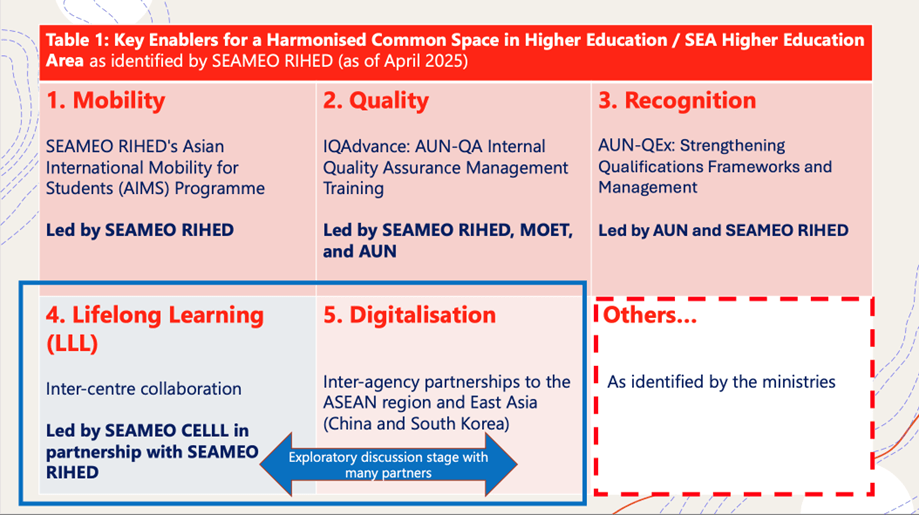
Southeast Asia’s provisional strategy map is deceptively simple: strengthen enablers, advance outcomes, and cultivate a policy community. Mobility, quality assurance, recognition frameworks, lifelong learning and digitalisation form the backbone of a harmonised regional system.
AI threads through all of them.
Digitalisation partnerships now extend beyond ASEAN to East Asia. Lifelong learning is no longer a slogan but an economic necessity. Yet the presentation surfaced an uncomfortable risk: “modernisation without development.” Universities may digitise, automate and optimise while neglecting the deeper task of human formation.
AI can accelerate production of knowledge. It can also mass-produce what Dr. Choltis Dhirathiti, Centre Director of SEAMEO RIHED, called “bad knowledge.” In such a landscape, the danger is not ignorance, but unfiltered abundance.
Who is responsible?
The governance question looms large. When AI generates harmful or unethical content, responsibility fractures. Is it the developer? The operator? The institution that deploys it?
Industry has a role in building transparency, privacy protections and accountability. But universities cannot outsource ethics. If they are to remain custodians of critical thinking, they must embed AI governance into institutional policy—risk management frameworks, usage guidelines, and clear lines of accountability.
Resistance is rarely about the technology itself. It is about adoption: how to integrate AI safely and mindfully into teaching, research and administration. Calls for standardised guidelines at policy level suggest that ad hoc experimentation is no longer sufficient.
The human margin
There is, however, a quieter opportunity. Global AI systems, whether from Silicon Valley or elsewhere, cannot fully grasp local languages, histories and community knowledge. Southeast Asia has space to develop AI attuned to its own contexts, deepening rather than flattening intellectual life.
Still, the most striking insight from Košice was almost old-fashioned: the human mind must steer the machine. AI may multiply productivity tenfold, but it does not replace judgement.
The future university, then, is not one that chooses between speed and ethics. It is one that recognises that innovation without trust erodes legitimacy, and ethics without innovation risks irrelevance.
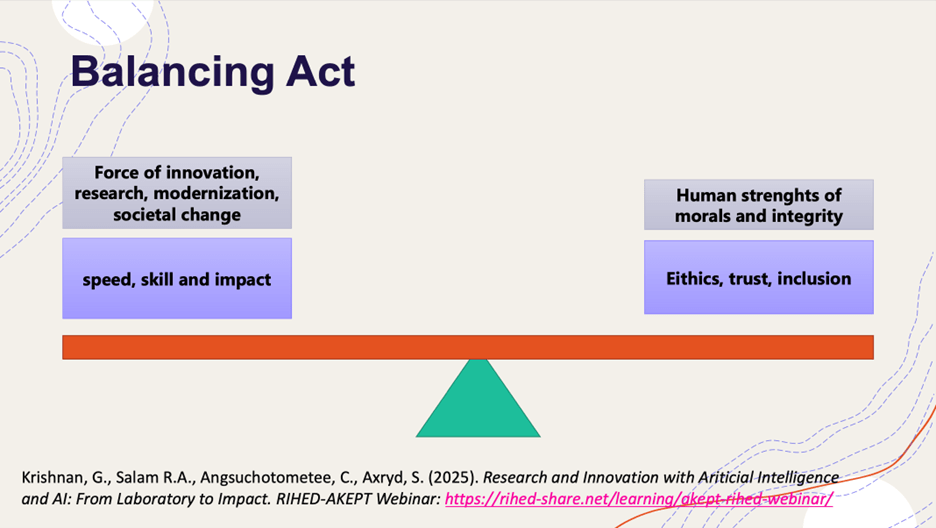
Balancing these forces—impact and integrity, modernisation and human development—may be higher education’s defining task in the AI century.